


UI Design
Design Thinking
PRESENCE
Making Interaction Tangible
TIMELINE
October 2025 – May 2026
TEAM
3 Designers,
Niclas Stengel (Interfacedesign), Wei Peng Hung (Productdesign) and me (Interfacedesign)
ROLE
Digital Prototyping and creating the design language by devoloping the structure like the pattern, icons and the visuals, as buttons and shapes.
CONTEXT
Course project at the University of Applied Sciences Potsdam and Weißensee in cooperation with Rolls-Royce Motorcars
The Problem
The interior of the car is currently designed for manual driving. However, as autonomous driving becomes more widespread, the interior will need to adapt to new requirements. Many controls will become redundant, and the traditional forward-facing seating arrangement will be replaced by a more centre-oriented one. While many manufacturers are opting for large screens, this trend conflicts with Rolls-Royce’s design philosophy, which emphasises craftsmanship and authentic materials.
The Idea
As the focus on interaction is no longer centred on the front area, a different approach is needed. Our solution involves displaying information only when and where it is needed, and facilitating interaction that comes to the user rather than the other way around.
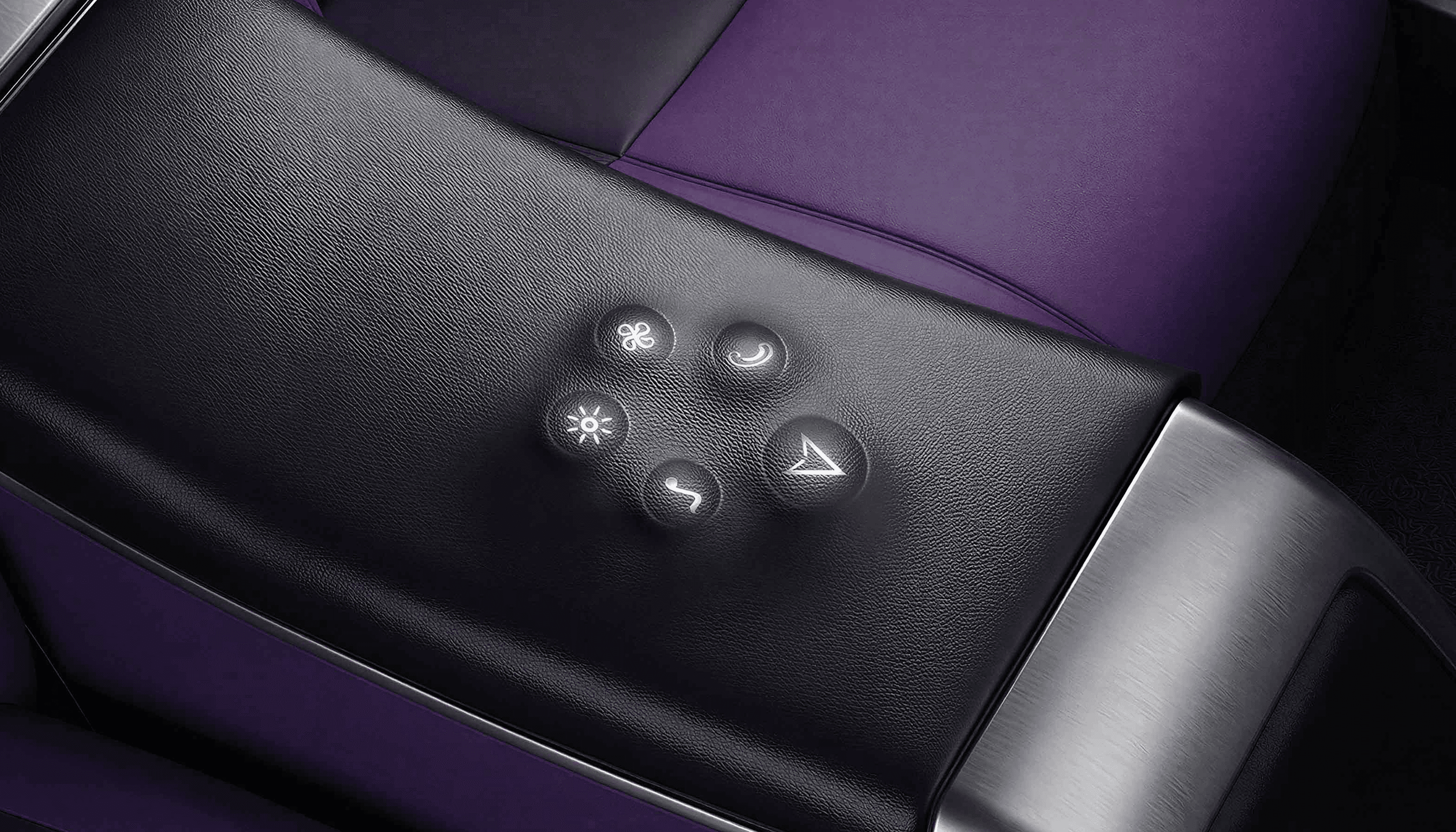
Our approach involves placing an inflatable plastic layer beneath the flexible upholstery of the armrests, seats and interior walls. This layer comprises air chambers that can be filled with air and controlled individually. The upholstery material then bulges in specific areas to create a tactile interface.

Sketch by Wei Peng
Introducing PRESENCE
With PRESENCE, we introduce a new dimension of in-vehicle interaction. Rolls-Royce is celebrated for its material authenticity, not for screen tapping or glass surfaces. By integrating specialized tactile materials beneath the interior trim, passengers can intuitively interact with the vehicle through any surface.
Synthesized with Freepik AI, Refined in Adobe Photoshop
How it works

Our approach involves placing an inflatable plastic layer beneath the flexible upholstery of the armrests, seats and interior walls. This layer comprises air chambers that can be filled with air and controlled individually. The upholstery material then bulges in specific areas to create a tactile interface.
Presentation at the BMW Penthouse-Munich

Presenting our project to designers of Rolls-Royce and BMW
Copyright BMW AG

Setting up the exhibition
Copyright BMW AG
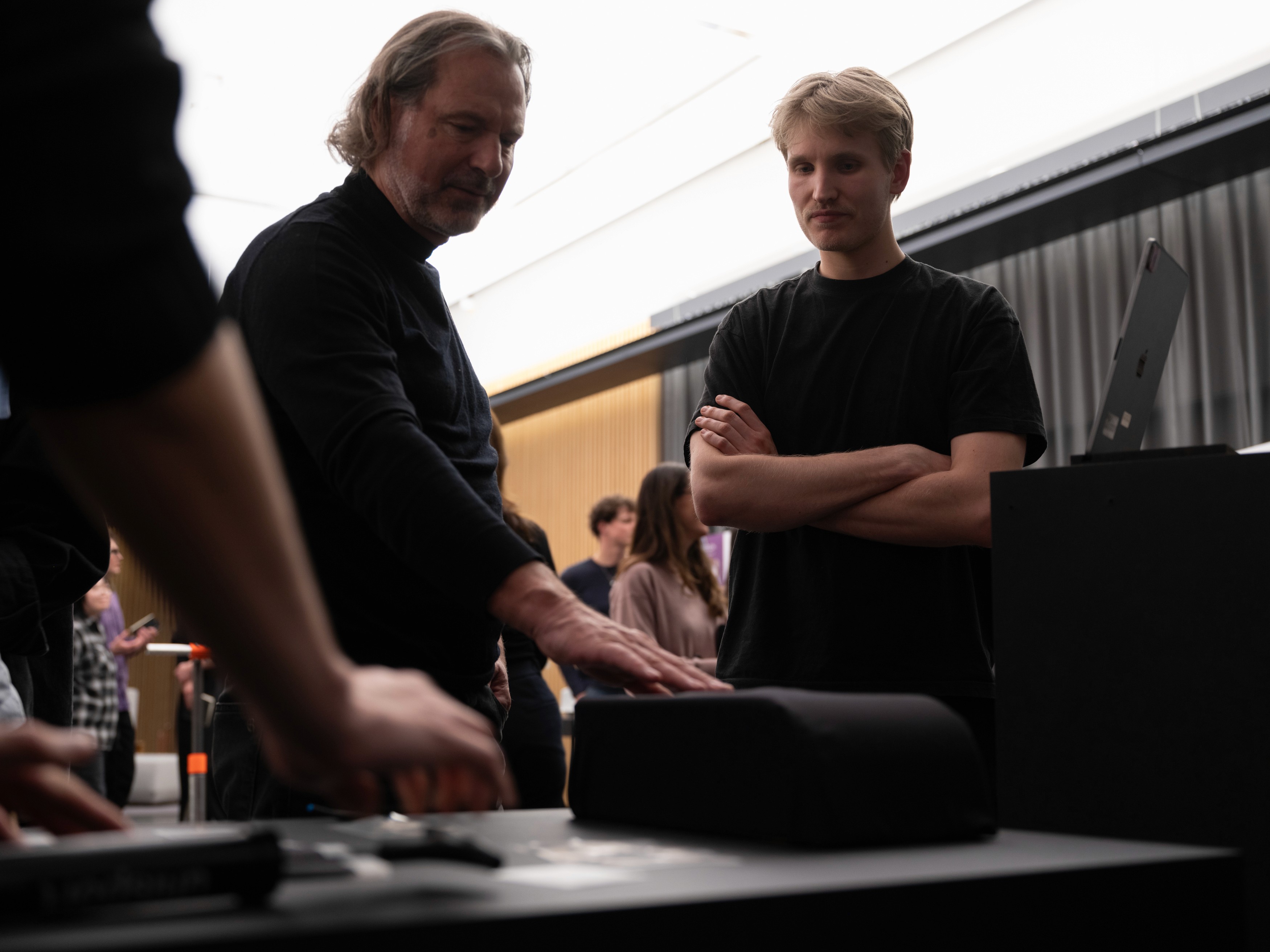
Showing the functional prototype
Copyright BMW AG
The prototype
This preview demonstrates how the PRESENCE tactile pattern dynamically responds to vehicle functions. The recording highlights the seamless transitions and real-time adaptability of the surface geometry.